
I Spent 3 Years Trying to Fix My Sleep
I Tried Every Sleep Fix for 3 Years. A Pharmacist Finally Explained Why Not One of Them Was Working.
I did everything right - consistent bedtime, no screens, melatonin at every dose, magnesium until my body couldn't take it anymore. I wasn't failing at sleep. I was failing at delivery. And the reason is something almost no one explains.


The 2am ceiling. If you fall asleep easily but wake at the same hour every single night - and nothing you've tried has stopped it - read this before you try anything else.
She was presenting to her team when it happened.
Not a collapse. Not a crisis. Just a word - a common word she used every week in meetings - that wasn't there. A clean gap where it should have been. She recovered. She talked around it. She moved on. No one in the room noticed.
She noticed. She was 43.
She had been waking at 2:51am for almost a year. Not from stress, not from noise, not from anything she could identify and fix. Her eyes would open in the dark, completely alert, and refuse to close for two to three hours. She would lie there with her mind turning over nothing urgent - the grocery run, an email she forgot to send, the meeting in the morning - and eventually the sky would lighten and she would get up and make coffee and try to force her way through another day on five hours of broken sleep.
She was 43 and still full speed. A job that didn't slow down. Two kids in middle school. The age when people tell you that you're supposed to be hitting your stride - and instead she felt like someone had quietly turned her dial down two notches. Not dramatically. Not in a way anyone else could see. Just less. Less sharp in meetings. Less present at dinner. Less herself.
The brain fog in that presentation was not the first. It had been happening more than she wanted to admit - a half-beat lag in conversations, absorbing what people said to her with a delay, responding correctly but not fully there. Her husband had started repeating himself. She hadn't told him why.
She was doing everything she was supposed to. Consistent bedtime - same time every night for eight months. Bedroom at 67 degrees. No screens after 9pm. She had tried melatonin at 3mg, then 5mg, then 10mg when 5mg stopped doing anything. Magnesium glycinate until the gut cramps made her stop. L-theanine. Ashwagandha. Valerian root. A $89 sleep coaching app that told her everything she already knew.
The 2:51am wakeup did not stop.
Her doctor ran labs. Everything normal. Suggested stress management. Consistent bedtime. She was already doing both. She left the appointment with nothing new and a quiet understanding that she was probably going to carry this for the rest of her life.
She was wrong about that. But it took an accidental 2am Reddit search to understand why - and what she found there made her genuinely angry at the time she had already lost.
Before I Tell You What Changed - Here Is What Those Months Were Actually Doing To My Body
Most people assume that broken sleep just means tiredness. I thought the same thing. What I found out later - after fixing the problem - is that ongoing sleep fragmentation causes measurable, progressive internal damage that most people never connect to their sleep until years of it have already accumulated.
I am giving you this information because it changes how seriously you treat a "sleep thing." It changed how seriously I treated it retroactively. And if I had known it earlier, I would have stopped accepting the problem much sooner.
DAMAGE #1 - YOUR BRAIN
Every night during the second half of sleep - specifically the deep-sleep cycles that happen between 2am and 6am - your brain runs what researchers call the glymphatic system: a biological waste-clearance process that flushes amyloid-beta proteins from neural tissue. These are the same proteins that accumulate in Alzheimer's disease. The glymphatic flush requires deep, uninterrupted sleep in precisely the window most people lose when they wake at 2am. Research published in Science (NIH-funded) shows that even a single night of disrupted sleep measurably increases amyloid accumulation in the prefrontal cortex.[1] This is not a future risk. It starts accumulating on night one. Over months and years, the debt compounds silently.
DAMAGE #2 - YOUR CORTISOL
In normal sleep, cortisol - your primary stress hormone - should not begin rising until 5 or 6am, when it serves as the body's natural waking signal. When you wake between 2 and 4am, your body interprets the disruption as a threat and releases an early cortisol surge at the wrong point in the cycle. Chronically elevated nighttime cortisol is one of the most well-documented drivers of visceral abdominal fat accumulation, systemic inflammation, collagen breakdown in skin, blood sugar instability, and accelerated cellular aging. The puffiness that won't resolve, the weight that won't shift no matter what you eat, the skin that seems to have aged faster than it should - this is frequently cortisol timing, not lifestyle. And it runs silently every night you wake up in that window.
DAMAGE #3 - YOUR IMMUNE SYSTEM
A landmark study from UC Berkeley found that a single night of fragmented sleep reduces natural killer cell activity by up to 70%.[2] NK cells are the immune system's first-response force - deployed against viruses, bacteria, and abnormal cell proliferation. After weeks or months of broken nights, your immune defense is chronically running below capacity. This does not show up in standard blood panels. It shows up as taking longer to recover from illness, catching things you never used to catch, and a body that simply does not feel resilient. Most doctors never check NK cell function. Most people never know this is connected to their sleep.
DAMAGE #4 - YOUR COGNITION
Memory consolidation, skill integration, language retrieval, and working memory restoration all occur during the overnight sleep cycles - specifically in the second half of the night. When you wake at 2 to 4am regularly, this process is interrupted systematically, not occasionally. The word that vanishes mid-sentence. The meeting you sit through without tracking. The conversation where you're present physically and somewhere else entirely. The reply that comes to you 20 minutes later when it should have been immediate. This is not "just tiredness." Sleep research describes this specifically as cognitive function impairment. And unlike fatigue, which caffeine can push through, the retrieval gaps and processing delays do not respond to coffee. They respond to sleep - specifically to the second half of the night you keep losing.
I found all of this after I fixed the problem. Knowing it now, I look back at those 11 months and I do not see a tired woman who needed better habits. I see progressive, compounding, entirely preventable damage that I was absorbing every night because the delivery method I was relying on was failing me before it ever reached my bloodstream.
That is what the 2am search finally explained.
The 2am Search That Changed Everything
It started with a Reddit thread.
I was awake at 2am (naturally) and instead of staring at the ceiling I typed something I had never specifically searched before: "why does melatonin stop working in the middle of the night."
The first result was a comment from someone who identified themselves as a pharmacist. I read it three times before I understood what it was saying.
Melatonin, they explained, is a "high first-pass metabolism" compound. When you swallow a melatonin tablet, it travels through your gut and into your portal vein, which carries it directly to your liver before it ever reaches your bloodstream. Your liver - doing its job - immediately breaks most of it down. How much gets destroyed depends on your individual liver enzyme activity. The range in published research: between 67% and 97% of the dose on the label is eliminated before a single molecule reaches your brain.[3]
A 5mg tablet might deliver 0.15mg to 1.65mg to your brain. If you are lucky.
And the fraction that does survive arrives all at once, as a spike. Your melatonin levels shoot up, you feel drowsy, you fall asleep easily. Then, an hour or two later, the spike collapses. Your brain reads the sudden drop as a signal that the night is ending, and it starts the waking sequence. Right around 2 to 4am - every night, with clockwork precision.[4]
I sat up in bed.
That was exactly what was happening to me. For almost a year. Every single night. I had not been failing at sleep. The melatonin had been failing to reach me in any meaningful amount, and the fraction that did was creating the exact wakeup it was supposed to prevent.
I spent the next two hours on PubMed. A 2015 systematic review in the European Journal of Clinical Pharmacology confirmed the extreme variability in oral melatonin bioavailability. A 2005 meta-analysis in Sleep Medicine Reviews described the spike-and-crash pattern from bolus oral dosing. Study after study described the phenomenon I had been living inside for nearly a year - not as a personal failure, but as a known, documented limitation of the delivery method.
The melatonin was real. The compounds were real. The problem was how they were reaching - or failing to reach - my brain.
3-33%
of oral melatonin survives first-pass liver metabolism and reaches the bloodstream[3]
~2 hrs
until oral melatonin peaks and crashes - triggering the 2am wakeup right on schedule[4]
8 hrs
sustained, even delivery when active compounds bypass the liver entirely via transdermal absorption[5]
The magnesium situation was, if anything, worse. Magnesium taken orally faces a completely separate problem: the gut has an absorption ceiling. Doses high enough to actually calm the nervous system at night often exceed that ceiling, pulling water into the intestine. That is where the cramps come from. Most people either take too little to do anything useful, or enough to cause digestive distress. The therapeutic window is frustratingly narrow and almost impossible to hit consistently through oral dosing.
I had not been failing at sleep. I had been using tools that were, by design, losing most of their effectiveness before they ever reached me. And every night I kept waking at 2:51am, the damage I had just read about kept compounding.
Clinical Note
"I have patients who spent years cycling through oral sleep supplements with almost no benefit. When I explain first-pass metabolism, they almost always say the same thing: 'No one ever told me that.' The ingredients they were taking were not wrong. The delivery format was the problem - and it is a problem that has been solvable for thirty years in clinical medicine."
- Functional Medicine Practitioner, quoted in Integrative Health Review, 2024

The research on oral supplement bioavailability had existed in clinical literature for over a decade. The gap was that almost no one in mainstream medicine communicated it to patients cycling through failed sleep supplements.
A Different Approach - Bypassing the Problem Entirely
Once I understood the problem, the logic of the solution was not complicated.
If the gut and liver are intercepting your sleep compounds before they reach your blood, you stop going through the gut and liver.
Transdermal delivery - absorption through the skin - has been used clinically for decades. Hormone patches, nicotine patches, pain management, cardiac medication. The mechanism is not experimental. The skin is a reliable absorption surface that bypasses the entire digestive system. A compound absorbed transdermally enters capillaries directly and moves into circulation at a slow, controlled rate - not a spike, but a sustained gradual release across hours. No bolus surge. No sudden collapse. No wakeup as your levels drop.
For sleep support specifically, the difference is structural: instead of a spike that peaks in two hours and crashes you awake, you get consistent, maintained blood levels across the entire night - including the 2 to 4am window when your brain most needs it.
Most sleep patches I found were not impressive - generic ingredient lists that looked good on a label but weren't formulated for actual transdermal bioavailability. The choice of compounds matters as much as the delivery method. Not every active ingredient crosses the skin barrier effectively.
Marevon's Sleep Support Patch was different. The formulation combines melatonin, lavender oil, valerian root extract, and hops - selected specifically for transdermal delivery, not for pill-form convenience. The patch releases these compounds slowly across 8 hours while you sleep. Steady. Even. Through the entire second half of the night.
I ordered it with the same low expectation I had brought to everything else. Nearly a year of failures had done a thorough job of killing my optimism. I was not expecting this to be different. I was expecting to add it to the list.
I put the patch on my upper arm at 9:30pm. Went to bed at 10. Read for twenty minutes. Turned off the light.
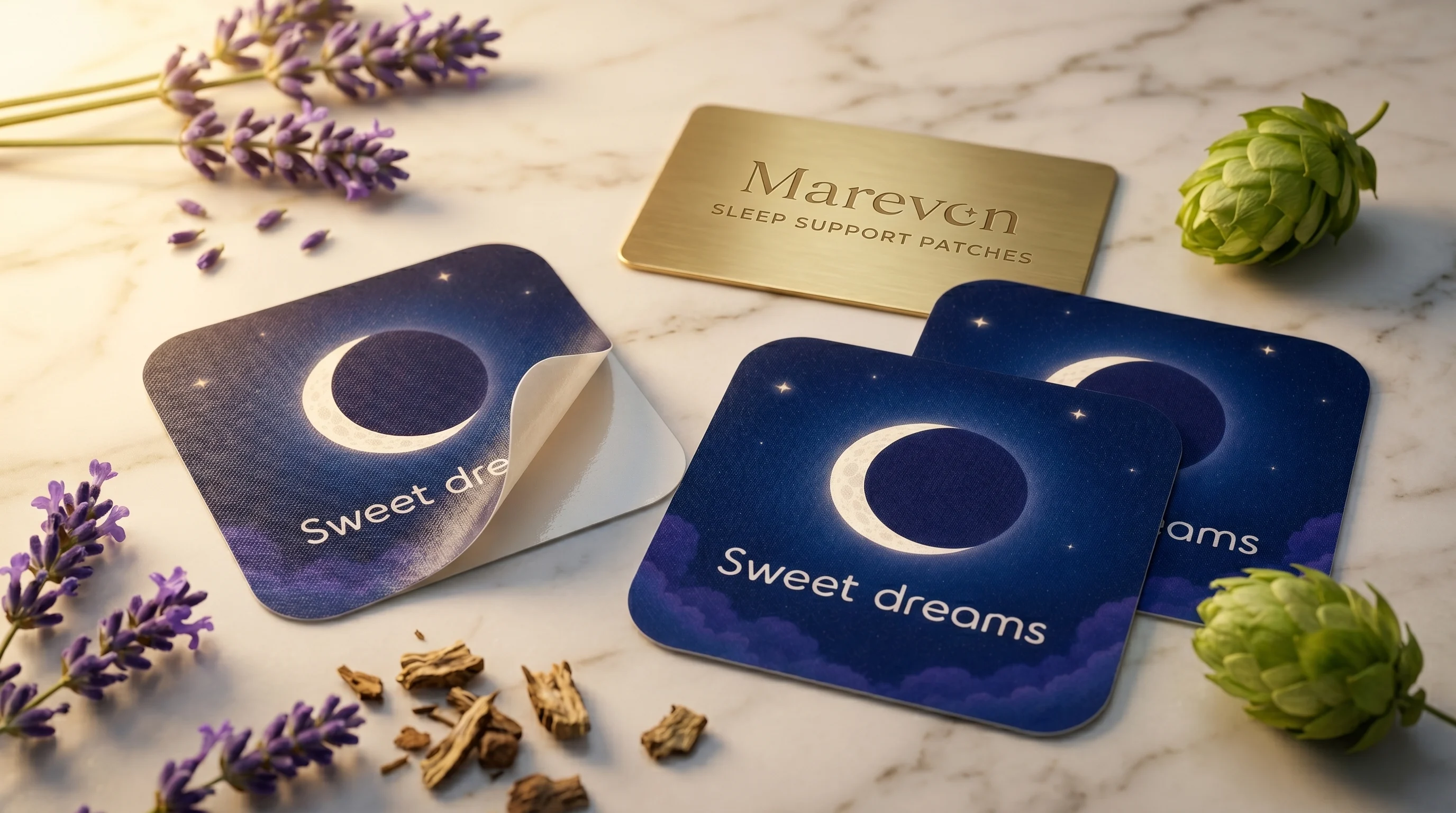
The formulation targets the delivery problem, not just the ingredient list. 8-hour transdermal release means the compounds are active through the exact window - 2am to 6am - where broken sleep does the most damage.
What Actually Happened - Night by Night
I am going to be precise about this because I tracked it and I remember it clearly.
1-2
Woke at 2:30am. Same as before.
I noted it without judgment. I was not expecting anything different after two nights. I had been here before.
3
Slept until 5:40am without waking.
I checked my phone when I woke up. Then I checked it again. I lay there trying to remember if I had woken and forgotten. I had not. I had slept through. I told no one for two more days because I didn't trust it yet.
Stopped dreading going to bed.
I had not noticed how much low-level anxiety I had been carrying toward sleep until it was gone. For nearly a year I had approached bedtime braced for the 2am ceiling. That background dread had quietly disappeared.
Woke up before my alarm, rested. First time in a year.
Not groggy. Not counting how many hours I had. Just awake, clear. My husband noticed before I told him. "You seem different," he said. "Less tired." He was right. The word gaps in meetings had stopped. The conversation delay was gone. I felt like myself again - the version I remembered.
Still sleeping through. No tolerance buildup.
With every oral supplement I had tried, whatever small benefit appeared would fade within two to three weeks. Three months on the patch - nothing has faded. The 2:51am wakeup has not returned.
I want to be precise: this did not make me a different person. I still have hard days. I still occasionally have a more restless night. But the systematic 2am waking is gone. The glymphatic flush is running. The cortisol spike is not. The cognitive gaps closed. And the cumulative, grinding exhaustion I had started calling my personality - that is gone too.
What Others Are Saying After 30-60 Days

Not counting how many hours you slept. Not calculating whether you can make it to Friday. Just - awake. Clear. Ready. It is a small thing that feels enormous when it comes back.
"I work in marketing and I had been losing sharpness for months - the word recall, the meeting fog, arriving late to thoughts I should have been ahead of. I blamed stress. Then perimenopause. Never sleep. The first-pass metabolism explanation hit me like a truck. Three weeks on the patch and the fog is gone. I cried in my car on the way to work because I felt like myself for the first time in over a year."
- Amanda C., 44, Texas ✓ Verified Purchase - 7 weeks
"I'm a nurse and I was skeptical - I understand bioavailability issues clinically. But I had never applied the concept to my own sleep. I was taking 10mg melatonin and still waking at 3am. When I thought about it from a pharmacokinetics standpoint, it made complete sense. Five weeks on this and my sleep tracker shows deep sleep in the second half of the night for the first time since I was in my 30s."
- Deborah H., 49, Ohio ✓ Verified Purchase - 5 weeks
"I'm 41 and I had completely normalized waking at 3am. I thought it was just what my body did after 40. My doctor agreed. Nobody treated it like something fixable. I almost didn't try this - I had tried so many things. Week two I slept until my alarm went off and I literally texted my sister at 7am just to tell her. She thought something was wrong. Nothing was wrong. I had just slept through the night for the first time in two years."
- Kristen M., 41, Colorado ✓ Verified Purchase - 6 weeks
"I'm 52 and I gave up on supplements years ago because they all stopped working within weeks. My tolerance built faster than the benefit. Four months on this patch and it has not faded. I think that's the transdermal delivery - no tolerance spike because there's no blood-level spike to adapt to. I feel like I finally understand why everything else failed."
- Carol B., 52, Missouri ✓ Verified Purchase - 4 months
What I Want You to Understand Before You Decide
If you have been waking at 2am for months - or years - and you have tried the melatonin and the magnesium and the $50 supplement blends and every sleep hygiene protocol you could find, I want to be direct with you about something: the problem is almost certainly not you. And it is not that sleep is unfixable after 40.
Oral melatonin destroys 67 to 97 percent of its dose before it reaches your bloodstream. Magnesium capsules hit your gut's absorption ceiling before they hit your nervous system. These are not scams or low-quality products. They are real compounds that do real things - in the fraction of the dose that survives long enough to reach you. The issue is a delivery format that was designed for convenience, not bioavailability.
Every night you spend waking at 2am, your glymphatic system is not completing its flush. Your cortisol is spiking at the wrong hour. Your immune system is running at a fraction of its capacity. Your cognitive consolidation is interrupted in the specific window it needs most. This is not a future risk you are managing - it is happening tonight, and it has been happening every night.
I spent 11 months in a brain fog that I blamed on stress, on age, on being a person who "just doesn't sleep well." The actual cause was a pharmacokinetics problem that a correct delivery format resolves. I am angry about that time. Not at myself. At the fact that no one in the stack of information I consumed ever explained the delivery problem clearly enough to act on it.
You do not need to spend another 11 months there.
Marevon backs every order with a 60-day money-back guarantee. No questions, no forms, no conditions. If eight weeks of consistent use does not produce a measurable shift, you get your money back. The risk is a few dollars and two months of your time. The upside is getting back the cognitive clarity, energy, and sleep quality that eleven months of nightly damage had been steadily eroding.
The brain fog in that meeting was six months into the problem. I did not know then what was accumulating. Now I do. And I am not going back.
Comments

The first-pass metabolism explanation. I have been on 10mg melatonin for 18 months and still wake at 3am every single night ON the melatonin. I thought I needed more. Reading this made the last year and a half make sense for the first time. Ordering today.

The brain fog section made me tear up a little. I'm 42 and I've been attributing the word-retrieval gaps and the conversation delay to stress, possibly perimenopause, maybe just aging. Nobody connected it to the 2am waking. I didn't either. This article just connected a lot of dots.

Rachel - same exact thing. I'm 45 and I've had two doctors tell me the brain fog is hormonal. Nobody asked about my sleep quality. The word gaps started almost exactly when the 2am waking started and I never made the connection until now.

I've been using these for 9 weeks. I was waking at 3am for two years and had genuinely accepted it as "just how I sleep now." Week two on the patch it stopped. I keep waiting for the bad nights to come back. They haven't. I'm 46 and I feel more cognitively present at work than I have in years.

The glymphatic system section. I'm a therapist and I know the research on amyloid accumulation and sleep but I never made the connection to my own nightly waking until this article laid it out so plainly. I ordered immediately. I've been blithely accumulating damage every night for 14 months and calling it inconvenient.

I'm a pharmacist and this article is accurate. First-pass metabolism is not something we communicate clearly at the retail counter when someone is buying melatonin. The liver destroys most of it. The dose on the label is not what reaches the brain. I've been recommending this patch to patients who come in cycling through higher and higher oral doses with no results. The mechanism is right.
References
- Shokri-Kojori E, et al. "Beta-amyloid accumulation in the human brain after one night of sleep deprivation." Proceedings of the National Academy of Sciences. 2017;114(17):4483-4488.
- Irwin MR, et al. "Sleep deprivation and activation of morning levels of cellular and genomic markers of inflammation." Archives of Internal Medicine. 2006;166(16):1756-1762.
- Harpsoe NG, et al. "Clinical pharmacokinetics of melatonin: a systematic review." European Journal of Clinical Pharmacology. 2015;71(8):901-909.
- Brzezinski A, et al. "Effects of exogenous melatonin on sleep: a meta-analysis." Sleep Medicine Reviews. 2005;9(1):41-50.
- Priano L, et al. "Transdermal delivery of melatonin in the treatment of sleep disorders." Journal of Pineal Research. 2004;36(4):234-240.
- Bent S, et al. "Valerian for sleep: a systematic review and meta-analysis." The American Journal of Medicine. 2006;119(12):1005-1012.
- Koulivand PH, et al. "Lavender and the nervous system." Evidence-Based Complementary and Alternative Medicine. 2013;2013:681304.
.webp?w=1254&h=1254)